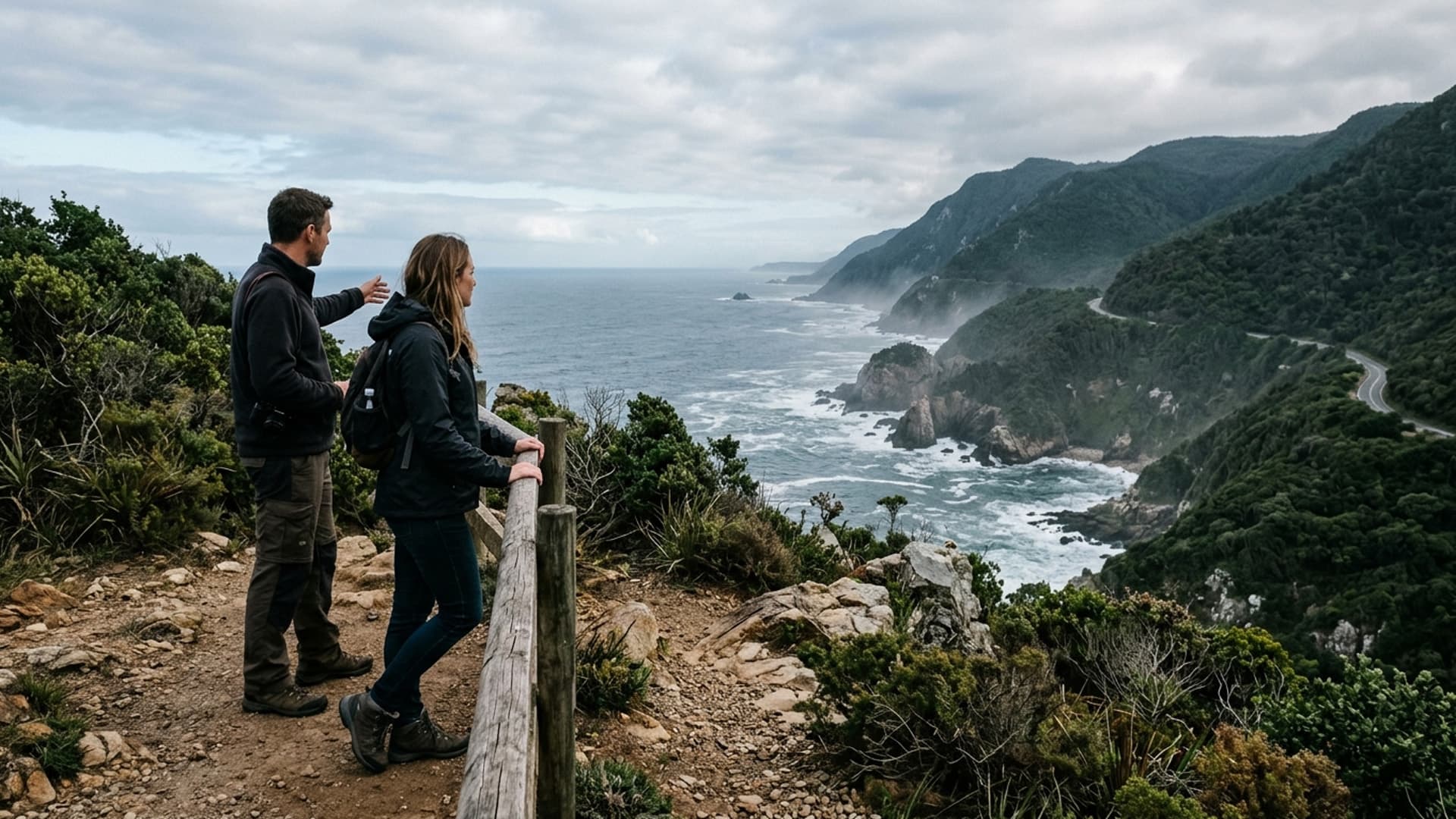
The Garden Route’s Appeal Lies in Its Changing Coastal Character
The Garden Route is not one scenery type: forest, coast, town and open road give a longer journey its distinctive sense of change.
The Garden Route has a name that suggests a single continuous landscape, but its appeal is the transition. A journey moves through coastal views, wooded stretches, small towns and open road. The experience changes with the weather and the pace of the day, making the route feel less like one attraction and more like a sequence of distinct places.
That variety is why a tour’s shape matters. A short visit may focus on a particular section, while a longer itinerary can give travellers time to experience different settings without treating every stop as a photo break. Local knowledge can help explain how the coast, settlements and natural surroundings fit together. It also helps visitors understand that a route name covers a broad region rather than one fixed attraction.
A good tour description makes its own scope clear: where the journey begins and ends, how much time is spent travelling, and which experiences are confirmed versus optional. This gives guests a realistic picture and supports better choices for their interests. South Africa Tours can present the Garden Route as an invitation to explore, while encouraging travellers to verify current access and operational details with the relevant local providers.
Use a base to explore nearby contrasts
Choose one or two nearby experiences for each full day and let the rest remain optional. A forest walk, a town meal or time on the coast can create a satisfying day without adding another overnight move. Check the distance and opening conditions of each option, then decide whether the group wants a guided visit or independent time.
If the weather changes, be ready to swap outdoor plans for a local indoor activity or a slower meal. Keep current contact details for providers and follow their cancellation guidance. Flexibility is easier when the itinerary includes alternatives before a disruption occurs.
Make arrival and departure days lighter
Do not use every transfer day for a major activity. Packing, check-out, driving and finding a new place all take time. A short stop can break up the route, but leave a buffer before a fixed booking or departure. This is especially important when the next base is unfamiliar or the group has substantial luggage.
Check access details before booking
Confirm check-in times, parking and the exact location of activities before choosing a base. Some properties are outside town centres, and a short map distance may involve a slower road. Ask about stairs, paths and transport if anyone in the group needs step-free access. Practical details can matter more than a scenic photograph when the day begins early.
Keep a list of nearby essentials such as food shops and fuel, but verify opening hours. A base that supports rest and simple logistics can make the broader route feel more relaxed.
Treat the Garden Route as a region, not a single attraction
The Garden Route is often described as one scenic drive, but a visit includes changing coast, forest, lagoons, towns and inland landscapes. The experience depends on where travellers stop and how long they stay. Rather than trying to see every named point, choose a few bases that suit the group's pace and priorities.
Look at travel time between overnight locations and consider how often the group wants to pack. Staying several nights in one place can allow a relaxed exploration of nearby activities. A moving itinerary may suit travellers who enjoy road journeys, but daily check-outs can reduce time at each destination. Decide which style fits the group before booking non-refundable accommodation.
Choose bases by what they make possible
Consider access to the experiences that matter: coastal walks, forest routes, beaches, town facilities, restaurants or guided activities. A base does not need to be the most famous town if another location offers a better fit for the group. Check distances to the actual meeting points and trailheads, not only the name of the nearest destination.
Review practical details such as parking, accessibility, meal options and arrival times. Some activities begin early or depend on weather. Staying closer to the departure point can reduce stress. For an evening event, think about the return journey and available transport before choosing accommodation far away.
Give the landscape time to change
The drive itself is part of the experience, but it should not become a continuous race. Build in safe, planned stops for viewpoints, food and rest. Use designated pull-offs and avoid stopping on narrow shoulders or obstructing local traffic. A scenic stretch may take longer than the map estimate if the group wants to explore.
Weather can alter visibility and outdoor plans. Keep an indoor or low-effort alternative for a rainy or windy day. Coastal conditions can differ from inland conditions, and the forecast for one town may not represent the whole region. Check a current local source before setting out.
Choose activities with the right amount of structure
Some visitors enjoy a guided nature walk or a local food experience; others prefer independent exploration. Check what a tour includes, how many people join, how long it lasts and whether it suits the group's mobility and experience. Ask about safety equipment and weather cancellation rules for activities on water or in exposed areas.
Do not book every activity in advance. A few planned anchors can provide structure while leaving open time for a recommendation or a slower day. If a particular activity has limited availability, reserve it through the provider's official route and save the confirmation.
Travel responsibly through towns and natural areas
Respect local residents, private property and conservation guidance. Stay on marked paths, take rubbish with you and avoid feeding or approaching wildlife. Ask before photographing people or entering a private business. Small towns are not simply service stops; they are places where residents live and work, so visitors should move and behave considerately.
Support local businesses through meals, markets and services that fit the trip. Read the terms before booking and confirm whether a provider is locally operated. A visitor's spending can support a destination, but respectful conduct matters just as much as the transaction.
Keep the trip comfortable
Different travellers may want different levels of walking, driving and activity. Choose accommodation and daily plans that allow rest, and check practical accessibility instead of relying on broad labels. Pack layers and sun protection, keep water available and plan meals around the group's schedule. A scenic itinerary is more enjoyable when basic needs are not an afterthought.
For self-drive trips, choose realistic distances and avoid driving when tired. Confirm vehicle arrangements, fuel availability and route conditions. Keep a charged phone and offline directions, but do not assume that coverage is available everywhere. Share the plan with someone and let them know when it changes.
Make a base flexible
A good base gives visitors choices when weather, energy or availability changes. Identify one main activity and one nearby alternative for each day. Keep addresses, opening hours and contact details current. If the group has a fixed departure, avoid ending the trip far away without a buffer.
The Garden Route rewards attention to contrast: a forest morning can feel different from a coastal afternoon, and a quiet town can change the pace of a long drive. Choosing fewer, well-placed bases gives visitors time to experience that variety rather than only pass through it.
Elisha Roodt
Sharing authentic stories and expert insights from the heart of South Africa's tourism landscape.